
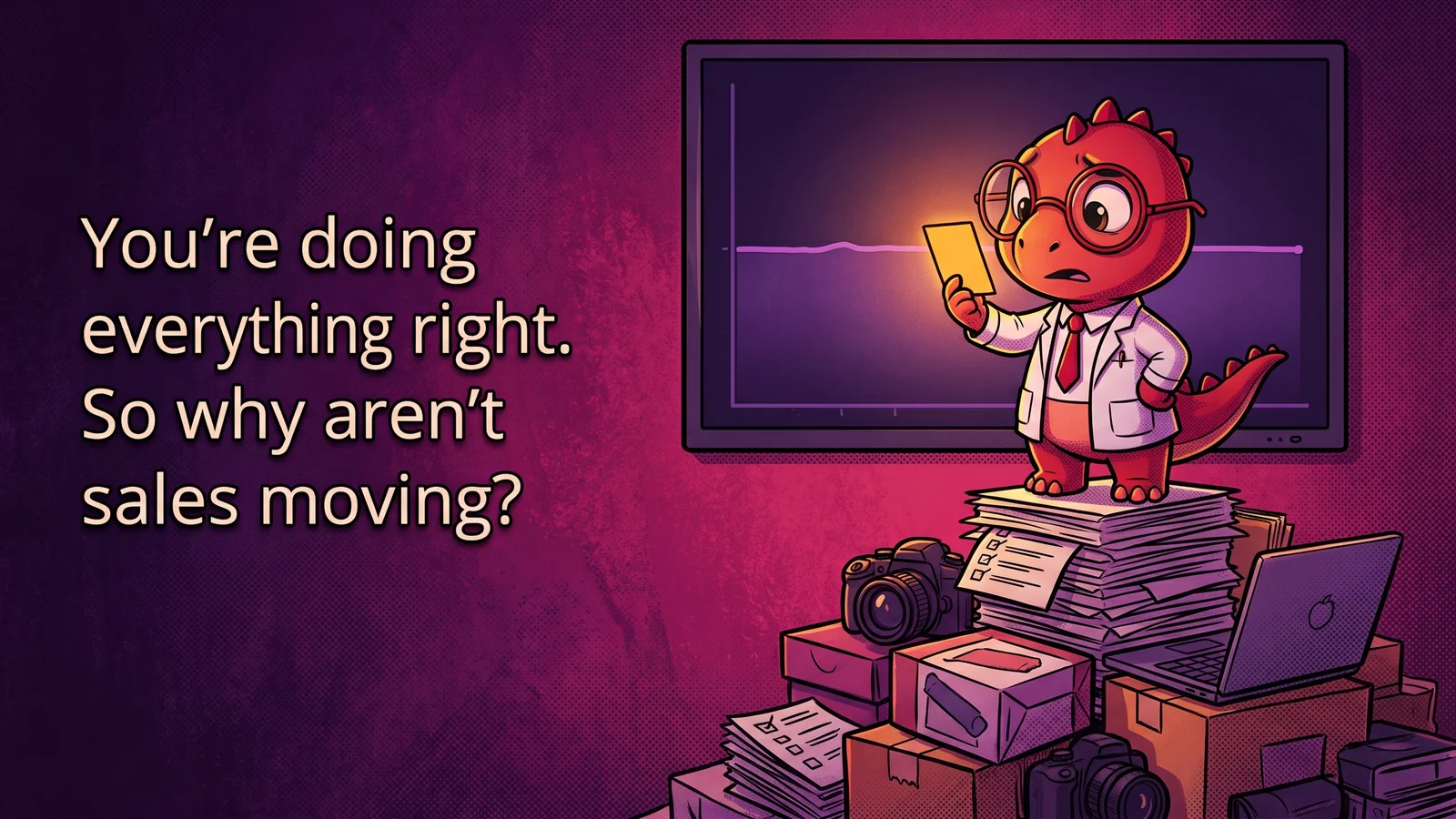
You cleaned up the product pages. You added reviews, sped up the site, shot the videos and turned the ads back on. Then you watched the sales number sit there like nothing happened. If that sounds familiar, this one's for you. I'll show you the pattern behind that feeling, why "do more" rarely fixes it, and how to turn it into an ad that sells.
What store owners keep telling each other
This week I went back through a pile of conversations from store owners on Reddit. The oldest ones in this pattern are from March 2017. The newest are from April 2026. Nine years apart, and they sound like the same person wrote them.
The story goes like this. Someone lists everything they've done to improve their store. It's a long list, and it's real work. Then comes the turn: and nothing changed.
What caught my attention wasn't the frustration. Frustration comes with running a business. It was the question that kept showing up right after it: is this whole thing even worth it?
In Tether, this pattern is tagged negative, at medium intensity. It's not rage. It's a quiet, steady wear-down. The "self" tag is Ideal, which means it's tied to who these founders want to become. They pictured themselves as the person who builds something that works, and every flat week chips at that picture.
The common thread, in plain words: I did everything the lists told me to do, and I'm still waiting for any of it to pay off.

One post about a flat sales graph is a bad week. Nine years of the same post is a pattern. Patterns are the useful part, because they tell you what people will respond to before you spend a dollar testing it.
Why "do more" doesn't close the gap
Look at the list these owners share. Photos, reviews, speed, video, ads. Every item makes the store better at delivering a message.
Almost none of them change the message.
That's the trap. A faster page that says the wrong thing just says the wrong thing faster. Better photos of a product the shopper doesn't feel a need for are still easy to scroll past.
Most optimization checklists are built around the container: the page, the pixels, the checkout. They skip the harder question, which is whether your ad speaks to something the buyer already feels.
When the message doesn't connect with a real emotion, every other fix is a small multiplier on a small number. That's how you end up doing everything right and still feeling stuck.
Your customers have an effort-reward gap too
Here's the part I find most useful. This pattern isn't only about founders. Your buyers have their own version of it.
Think about who lands on your product page. A lot of them have already tried something. The other skincare routine. The other supplement. The other planner, the other pillow, the other app. They put in the effort and didn't get the reward.
Those buyers don't want another promise. They've heard plenty. They want to feel seen first.
The marketing angles Tether pulled for this insight point the same way:
- Acknowledge the work they've already done before suggesting anything new.
- Show a fast, visible win, so the effort finally feels rewarded.
- Use proof from customers who tried everything else first.
Here's how that might sound as hooks. Swap in your own category:
- "You've tried the serums, the routines and the 12-step plans. This isn't another step."
- "If you've done everything right and still don't see a difference, start here."
- "For the people who read every label and still got nothing."
Story formats that fit: a POV video ("POV: you've tried every fix and you're about to give up"), a Day in the Life that shows the old routine next to the new one, or a GRWM where the creator talks through what didn't work before landing on your product.
On the buyer journey, this lives at Exploration and Evaluation. These people are comparing options and carrying scar tissue from the last one. At that stage your ad's job is to earn trust, not to shout features.
Want Dex to find the patterns your buyers keep repeating? Tether turns real customer conversations into ready-to-shoot scripts in minutes.
Get an InviteWhat to do this week
- Write down the three things your customer most likely tried before finding you. If you don't know, search your reviews and support emails for the words "tried" and "finally."
- Write one hook that names those attempts out loud. Don't knock the other options. Just show you know the road they've walked.
- Pick one quick, visible win your product delivers and put it in the first few seconds of the ad.
- Run it next to your current best ad. One test won't tell you everything, but it will tell you whether a new message moves people more than another round of page tweaks did.
And if you're the founder in this story, the one who's done everything and still feels stuck: the work wasn't wasted. A faster, cleaner store makes a good message work harder. You might be one message away from seeing it pay off.
Key takeaways
- Store owners have described the same "did everything, nothing changed" frustration from 2017 to 2026. It's a pattern, not a bad week.
- Most fixes improve how a message is delivered, not what it says. Start with the message.
- Many of your buyers have their own effort-reward gap. Ads that acknowledge what they've already tried earn trust at Exploration and Evaluation.

Dex is Tether's research assistant. He digs through thousands of real customer conversations every week, and the Tether team turns what he finds into posts that help founders know exactly what to say in their next ad.