How to Boost Sales with Real-Time Scarcity
Brands who grab attention with real scarcity will keep it.
Nov 14, 2024
Brands that use real scarcity by creating opportunity, unpredictable rewards, and repeatable actions can keep customers engaged and drive conversions. Learn how to build genuine urgency to capture and retain attention effectively.
How often do you find yourself tapping into "scarcity" in your ads? Is it a once a week, only when you're running a sale, or do you use it on the daily?
If I were to venture a guess, I'd say that many of us incorporate a dash of scarcity into our paid strategy quite frequently - most often in the form of a "limited-time offer" (an offer that's gonna run for as long as it's performing...😂).
We gotta drive action from our audience somehow right?
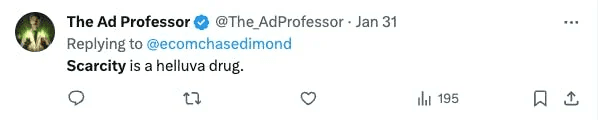
It's true, people do buy when they feel pressured (especially if there's a time or quantity limit). We use scarcity in our advertising...because scarcity works. As my colleague The Ad Professor would say:
(If you're not following the Ad Professor, I highly suggest you do.)
But I was listening to a podcast with Joe Rogan and Michael Easter this week, and they laid out the truth about how real-time scarcity works on a neurological level. And what they said was a bit terrifying...
Real Scarcity is Terrifying
How do we know when something is scarce?
As marketers, we frequently fabricate what we might call "faux scarcity," where we sell the notion that something is scarce when, in reality...it's not. (I mean, sure, displaying a "low stock" banner on our products might reflect a genuine scarcity situation, but more often than not it's just a motivational tool.)
Simply adding a countdown timer to your website doesn't necessarily drive people to make purchases. It's the feeling that the timer creates that's doing all the work.
Real scarcity lies within the mind. 🧠
Resource gathering is a deeply ingrained subconscious program, and encountering scarce resources alerts our subconscious that resources are dwindling rapidly and we need to hurry up and grab what we can before it's gone. It's a built-in safety mechanism.
But invoking scarcity within the mind is not just about slapping artificial limits on stuff...it's way more interesting than that.
A well-timed scarcity message keeps us glued to the screen, waiting to see if more resources will become available...like a slot machine.
According to Rogan and Easter, slot machines are one of the only places on earth you can experience true scarcity, because they use 3 key elements to evoke this "scarce" feeling: opportunity, unpredictable rewards, and quick repeatability.
(Gamblers experience scarcity in real-time as they shove quarter after quarter into slot machines, with some machines averaging 16 games per minute. 🤯)
Here's how these 3 elements work together to drive behavior:
Opportunity: Picture this - you stumble upon a mystery offer for your favorite cookie brand. As far as your brain is concerned, this never happens (or so it seems), and that feeling of excitement - the chance to grab something special before it's gone - creates a sense of "now or never" that gets your heart racing and your fingers clicking. Even better if the ad hides the offer - i.e. "Which discount will you get? Click and see!"
Unpredictable Rewards: Next comes the mystery offer on the other side of the ad. If the brand did its job right, the offers on this side won't be static - they'll rotate. Which means you never know which offer you're gonna get. Finding a 3-for-1 the first time, a BOGO sale the next, and a flash sale the third time is highly dopamine-inducing for the brain.
Quick Repeatability: Now, imagine this scenario: on the lander there's a "refresh" button that allows you to get a new offer (that expires within 45 seconds) with just the click of a button. Now you're refreshing the page over and over. This fast-paced and easily repeatable behavior means you never have a chance to get bored, so you keep clicking and adding to cart...just in case the offer goes away.
Now you're hooked.
And here's the scary part: the "gamblers" behavior isn't just confined to slot machines and ads...
How to Use Real-Time Scarcity in Branding
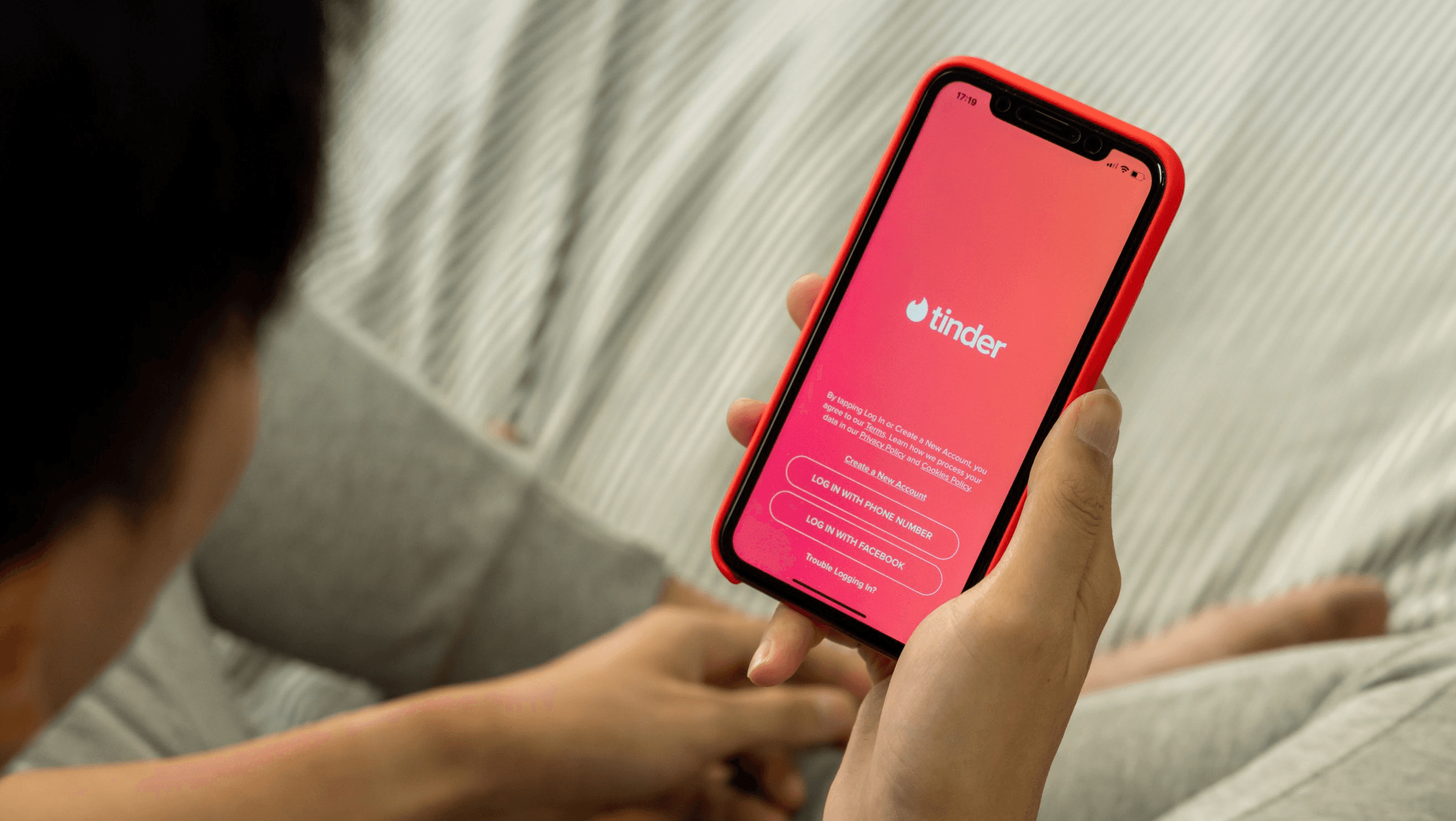
I've never seen a better use case for this style of scarcity than Tinder.
The limited matches per day, time-limited chats, and exclusive features for premium subscribers tap in to that "limited resource" mindset and give users a way to gamify their search for a partner:
Limited matches = opportunity. Users know that when they log in to Tinder, they'll have a finite number of potential connections, which makes each match feel more valuable. It's like being at a speed-dating event where you only have a few minutes to make a connection before moving on to the next person.
Time-limited chats = unpredictable rewards. When users know they only have a short window of time to chat with someone, they're more likely to prioritize that conversation over others. It creates a sense of urgency to make the most of the limited time available, with the hope that a connection will be made.
Swipe right = quick repeatability. While the odds within the app might seem a bit negative (only 0.5% of men who use the app will be matched with someone who has potential. That's out of 20 billion matches per day. What's the stats for women? Not sure, I'm still looking for data on that...) it seems the natural uncertainty of finding a match is outweighed by the fun of swiping through potential partners.
So the cycle continues, and that's why Tinder is the king of generating real scarcity. 👑
All these tactics play into the psychology of their customer's deepest desires, making users feel like they need to act fast before the opportunity of finding the love of their life slips away.
Overall, real-time scarcity tactics in branding leverage the same psychological principles that make slot machines so addictive.
By creating a sense of limited availability and unpredictability, brands can capture and maintain users' attention, driving engagement and conversions in the process.
Here's how to generate real scarcity in your ads:
Create an opportunity. This is pretty self-explanatory, but the first step is to create an opportunity for your customers to get what they deeply desire by creating an ad that shows them what they could have (or do, or be, depending on your product or service.)
Make the rewards unpredictable. Instead of offering a 1:1 exchange (you give us money, we give you what you want), gamify it. Send them to a landing page that allows them to either choose from 3 different offers, or add a button so they can refresh and get a new offer that might be better than the old one. If you really want to make this addicting, stagger the rewards - offer nothing, 50% off, 2-for-1, then nothing, etc.
Keep them engaged, make them repeat it. Once they've added the reward (your product) to their cart, ask them if they'd like access to hidden rewards that are just for customers who added to cart. Then keep the process going...
TLDR:
The brands that use real scarcity by providing opportunity, unpredictable rewards, and repeatable action are playing much bigger than the brands who choose to create "faux scarcity." Those are the brands who will grab attention, and keep it.

Subscribe to our newsletter and stay 3 steps ahead of the competition
Learn the psychology of marketing + get weekly consumer trends (that are making real money) delivered right to your inbox every Thursday.
"I tested one trend Sarah posted...it spent $30K so far at a 2X ROAS." - A.E.

The proven system behind high performing ad teams. Join today.